
Insight
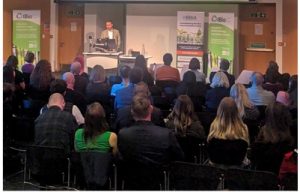
The Industrial Biotechnology Innovation Centre (IBioIC) held its 12th Annual Conference in Glasgow on 10th and 11th March 2026 in partnership with the BioBased and Biodegradable Industries Association (BBIA). IBioIC 2026 has been a showcase of how the biotech industry in the UK is maturing. The conference was packed with exciting presentations from industrial biotechnology start-ups and scale-ups from across the UK discussing their groundbreaking technology and innovative business models. The maturation of the sector is increasingly visible: companies are growing and scaling, and attracting considerable public and private investment even in the currently challenging investment environment. Industrial biotechnology is now delivering tangible solutions across a range of sectors from apparel to cosmetics, food and feed, as well as the engineering biology supply chain. The sector is clearly moving beyond the traditional focus on ultra-high value applications such as biopharmaceuticals. Underpinning this growth is a sustained supportive policy environment, and conference attendees heard a very enthusiastic presentation from the Department for Science, Innovation and Technology (DSIT), which confirmed the strategic importance of industrial biotechnology at the UK government level.
Generative AI is making significant waves across industrial biotechnology. Conference attendees heard about AI-enabled functional protein design, as well as tools that design metabolic pathways and even carry out early stage techno-economics and process analysis, supporting the development of downstream-informed business cases for innovators in the biotech space. This topic was explored in the workshop delivered by Twig Bio, ‘AI-Powered Design to Deliver the Next Big Ingredients’.
A strong theme throughout the conference was the evolution of how sustainability is interpreted as a value offering. Sustainability is no longer a qualitative concept open to interpretation. Biotech solutions are now expected to deliver measurable carbon savings and environmental benefits. This topic was explored in the workshop entitled ‘Measuring Sustainability: Life Cycle Assessments for Bio-based Products’. Beyond this, there was a strong consensus among innovators that industrial biotechnology is at the precipice of exponential growth due to the evolving understanding that displacement alone might not always be a sufficient biotech value proposition. In the words of Jonathan Edmunds from Woodly, ‘you must improve on what you are replacing’. The innovation showcase demonstrated a wide range of strategies through which industrial biotech derived solutions can improve the performance of existing materials. Further, the decrease in the appeal of displacement-only focused business models in industrial biotechnology was discussed in the context of the difficulty of competing with more established and often heavily subsidised sectors. As the chair of Session 1, Fiona Mischel (Holiferm), described it, biotech is ‘walking backwards uphill in heels’ against the petrochemical industry. Companies, therefore, need to innovate to deliver stronger and more compelling value propositions to end users and investors.
Another major theme of the conference was clustering. IBioIC is playing a leading role in creating a biotechnology cluster in Scotland which includes collaborative projects not only with universities but also with colleges. We heard about the FlexBio expansion, UKRI Launchpad projects, and international engagement in delivering skills courses and training for scale. There was also engagement with the European Circular Valleys project. It was encouraging to hear how the innovation, technology, and skills themes of IBioIC continue to expand and gain influence. Major life sciences organisations such as CPI have also increased their activity in cluster development in the sector, delivering the workshop ‘Connecting and supercharging Scotland’s Life Sciences Cluster – Developing Cluster Development Organisation to support sustainable and inclusive growth of the life sciences sector in Scotland’.
On the final day, attendees also heard about the influence of biotechnology in other sectors, including forestry, aquaculture, and even space. Industrial biotechnology is therefore not simply a sector but a process that improves systems across a wide range of industries while delivering both economic and environmental benefits.
Jolanta Beinaroviča, Senior Consultant at Optimat, commented:
‘It has been incredibly rewarding to hear the success stories on growth and the diversity of innovation taking place in the industrial biotechnology sector. I can see clear signals that the sector is maturing and moving towards significantly more customer-oriented business models and value propositions. This conference showcased the combination of scientific and technological excellence and the commercial acumen of pioneers in this industry. I am excited to see how policymakers, innovators, and academia continue to work together to realise the full economic benefits that biotechnology can offer on our journey to net zero, and how we at Optimat can support them along the way.’